 (202) 555-0115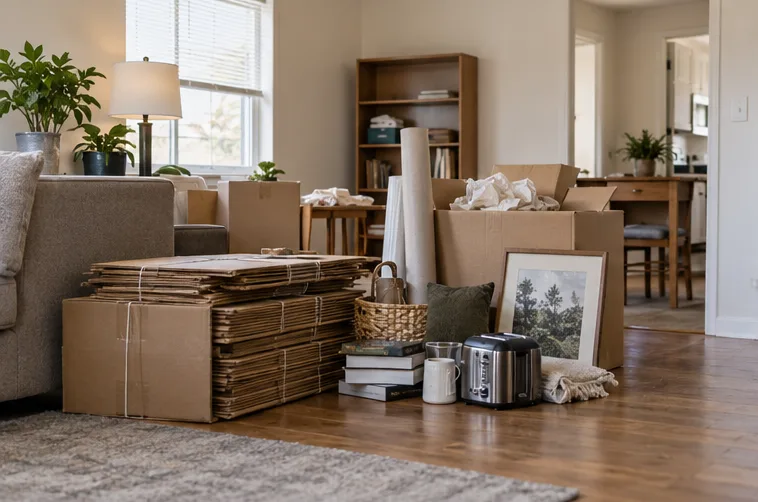
Moving debris usually means non-hazardous household leftovers from packing and unpacking: flattened boxes, clean packing paper, bagged ordinary trash and small unwanted household items. Renovation debris, chemicals and unknown liquids are different material streams.
Use three piles
| Pile | Examples | Next step |
|---|---|---|
| Clean recyclable material | Dry cardboard and accepted paper | Follow the current local recycling rules |
| General removal | Bagged household leftovers, damaged small items, packing material | Include in the item photos and estimate |
| Separate handling | Paint, fuel, batteries, chemicals, pressurized containers, sharps | Use the appropriate hazardous or specialty program |
Clean cardboard is easier to route
Flatten boxes and remove food, foam blocks and loose plastic when practical. Wet or food-soiled cardboard may not be accepted with clean recycling. Check the current rules for the address.
Do not hide unknowns in bags
Closed bags should contain only ordinary household material you can identify. If a container is leaking, unlabeled or pressurized, keep it separate and ask the responsible local program how to handle it.
Photo checklist for an estimate
- One wide photo of the whole pile
- Close photos of bulky or unusual items
- Bag and box count
- Stairs and carry route
- Parking or loading point
- Anything excluded or awaiting separate guidance
Next step
Use the checklist to make the removal list concrete, then review the companion Post-Move Cleanout page before calling with the address and access notes.